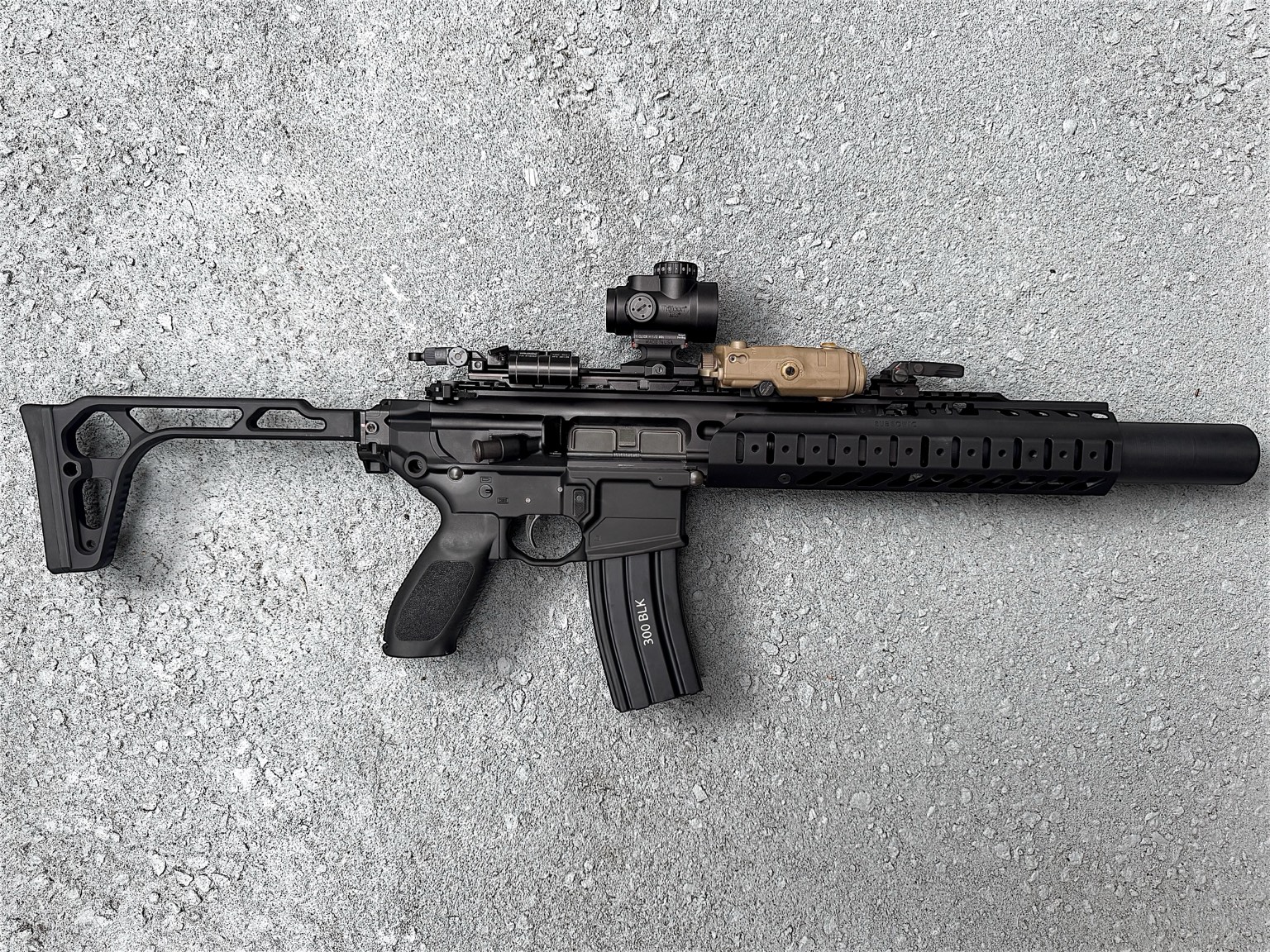
Few modern firearm configurations have developed the visual following of the SIG MCX family’s Low Visibility Assault Weapon, or LVAW. The compact MCX concept, combined with the distinctive extended handguard and subdued profile associated with the LVAW, has become a recognizable reference point for collectors and enthusiasts interested in modern military small arms.
This example starts with a SIG MCX Rattler and takes the platform in that direction with an aftermarket LVAW-style handguard from Space Magic Industries. The result is a modern civilian configuration that captures the appearance of the LVAW without being represented as an original factory military LVAW.
The Rattler as the starting point
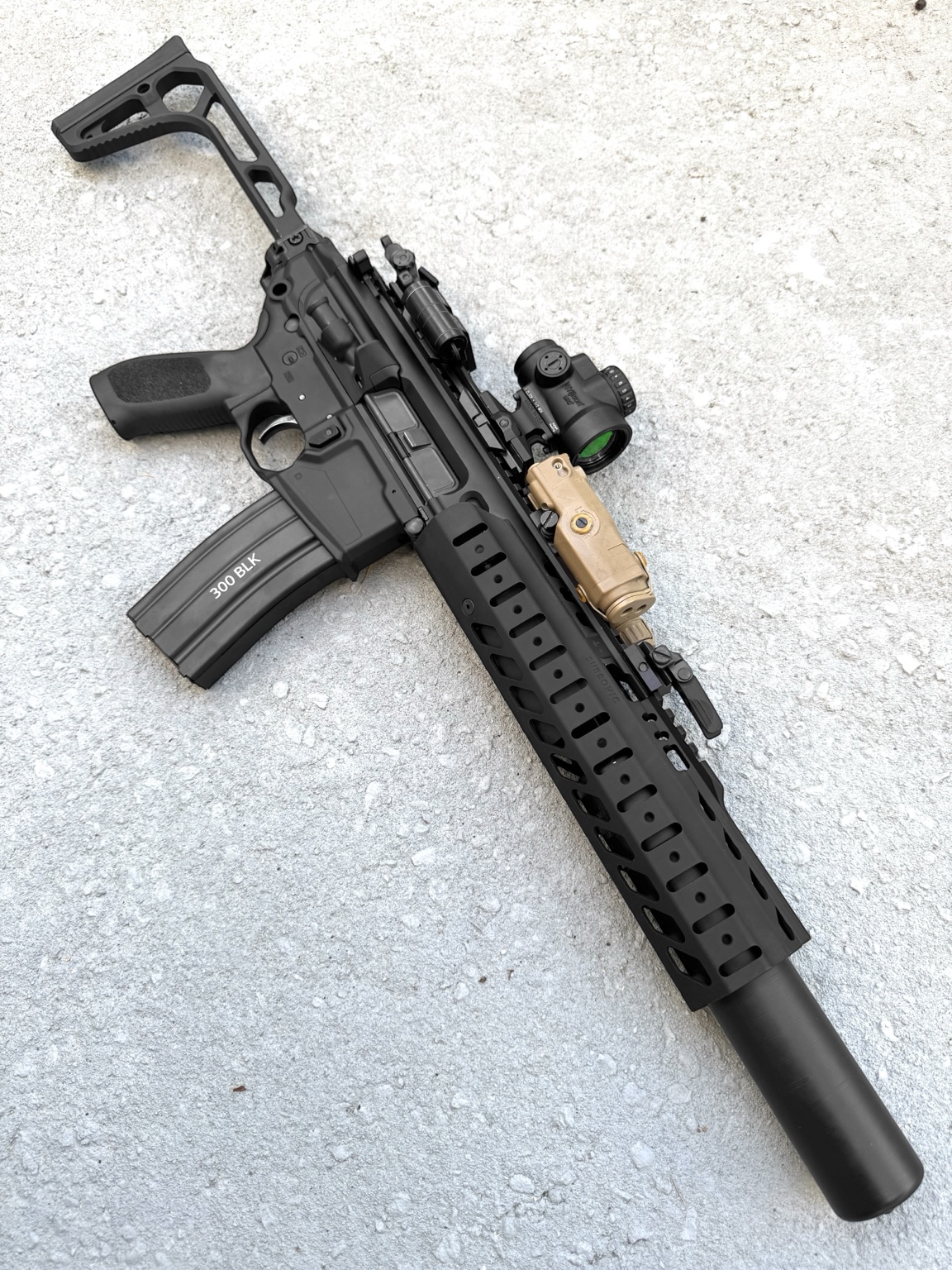
The Rattler occupies an unusual place in the MCX family. SIG Sauer originally presented the platform as an exceptionally compact MCX developed for specialized users, and company literature lists the Rattler in both 300 Blackout and 5.56 NATO configurations. Earlier SIG documentation identifies the 300 Blackout Rattler with a 5.5-inch barrel and an M-LOK handguard, along with the MCX family’s ambidextrous controls and folding-stock architecture.
That compact starting point is part of what makes the Rattler such an interesting base for an LVAW-inspired configuration. Rather than attempting to turn the rifle into something historically it is not, the owner is using a commercially available MCX platform to reproduce the distinctive proportions and visual character associated with the LVAW concept.
The handguard changes the silhouette
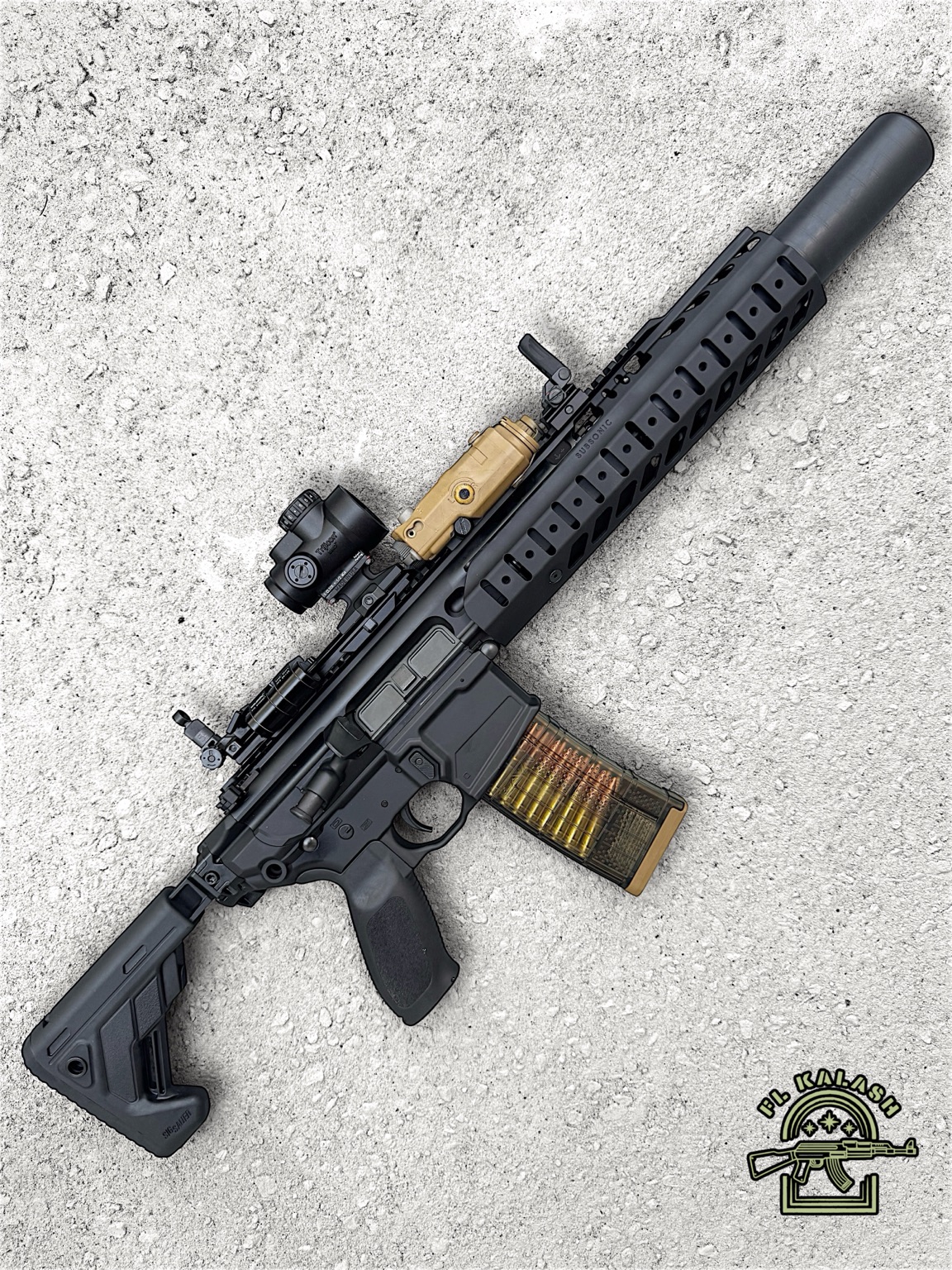
The most obvious change is the handguard. Space Magic Industries describes its 10.5-inch LVAW Rail as a collaborative project with Shadow Strategic, developed from the specifications and visual characteristics of the original LVAW handguard. The company offers a version specifically for the Rattler and lists the Rattler version at approximately 9.4 ounces assembled.
According to Space Magic Industries, the rail is machined from extruded 6061-T6 aluminum with a Type III hardcoat anodized finish. The assembly also incorporates a hardened-steel linkage system and an aluminum heat shield. The manufacturer emphasizes that the commercial versions include changes necessary for compatibility with different generations of MCX firearms.
On the photographed rifle, that longer handguard dramatically changes the Rattler’s proportions. The receiver remains compact, but the extended rail and enclosed front-end treatment give the rifle the elongated, low-profile appearance that immediately brings the LVAW aesthetic to mind.
LVAW-inspired, not an original LVAW
That distinction is important when documenting modern firearms. The photographs show a commercial MCX Rattler configured in an LVAW-inspired style. The Space Magic Industries component is an aftermarket reproduction designed to bring the LVAW handguard concept to commercial MCX platforms. It should not be confused with an original military-issued LVAW or described as a factory-original SIG configuration.
For collectors, this is more than a semantic distinction. Configuration, provenance and originality are separate questions. A historically significant configuration can be studied through a modern reproduction, but the reproduction itself should be documented accurately. In this case, the aftermarket handguard is actually part of the story: it demonstrates how today's collector market is recreating visual details from specialized modern military platforms.
Details that complete the look
The photographed setup goes beyond the handguard. The rifle is shown with a compact optic, a tan laser/illumination unit, folding backup sights and a minimalist stock. Together, those components reinforce the understated, purpose-built appearance of the LVAW concept without requiring the rifle to be presented as a historical military artifact.
The 300 Blackout magazine is another visible clue to the configuration. The caliber has long been associated with the compact MCX/Rattler concept, and SIG's own documentation identifies 300 BLK as one of the Rattler's chamberings.
From a photographic standpoint, the configuration is particularly effective because the accessories remain visually subordinate to the handguard and receiver. The black-on-black finish creates a cohesive silhouette, while the tan accessory adds just enough contrast to separate the upper portion of the rifle from the background.
Why configurations like this matter to collectors
Modern firearms collecting increasingly includes documentation of configurations, not just factory-original examples. A rifle can be historically interesting because of its production date, manufacturer and markings, but it can also be interesting because it documents a particular design language or period of the aftermarket.
The LVAW-inspired Rattler sits comfortably in that second category. It represents the intersection of a commercially available MCX, a historically influential military configuration and a modern aftermarket effort to reproduce one of its most recognizable components.
That makes the handguard more than an accessory in the context of this feature. It is the component that connects the photographed rifle to a larger story about how specialized military small arms influence civilian collecting and how reproduction parts allow enthusiasts to study those designs in a contemporary setting.
Florida Kalash Media perspective
What stands out about this Rattler is how effectively a single component changes the identity of the platform. The underlying MCX remains immediately recognizable, but the LVAW-style handguard gives the rifle a completely different visual presence.
For collectors interested in modern military firearms, configurations like this are worth documenting precisely because they occupy the space between historical reference and contemporary interpretation. The rifle is not being presented as an original LVAW; it is a modern Rattler configured to reflect that distinctive design.
That distinction—and the provenance of the individual components—is what makes modern configuration photography valuable. It preserves not only what a firearm looks like, but also the story of how that particular configuration came together.
This feature is based on original photography by Florida Kalash Media and publicly available manufacturer information. The article is a collector-focused editorial feature, not a hands-on firing review. No claims are made regarding recoil, accuracy, sound reduction, durability or other performance characteristics of the photographed configuration.
The photographed handguard is identified as the Space Magic Industries LVAW Rail for the Rattler. Space Magic Industries describes the product as a 10.5-inch LVAW-style rail developed with Shadow Strategic and lists its materials, approximate assembled weight and Rattler compatibility on its product page.
Space Magic Industries — LVAW Rail →
SIG Sauer — MCX product literature →