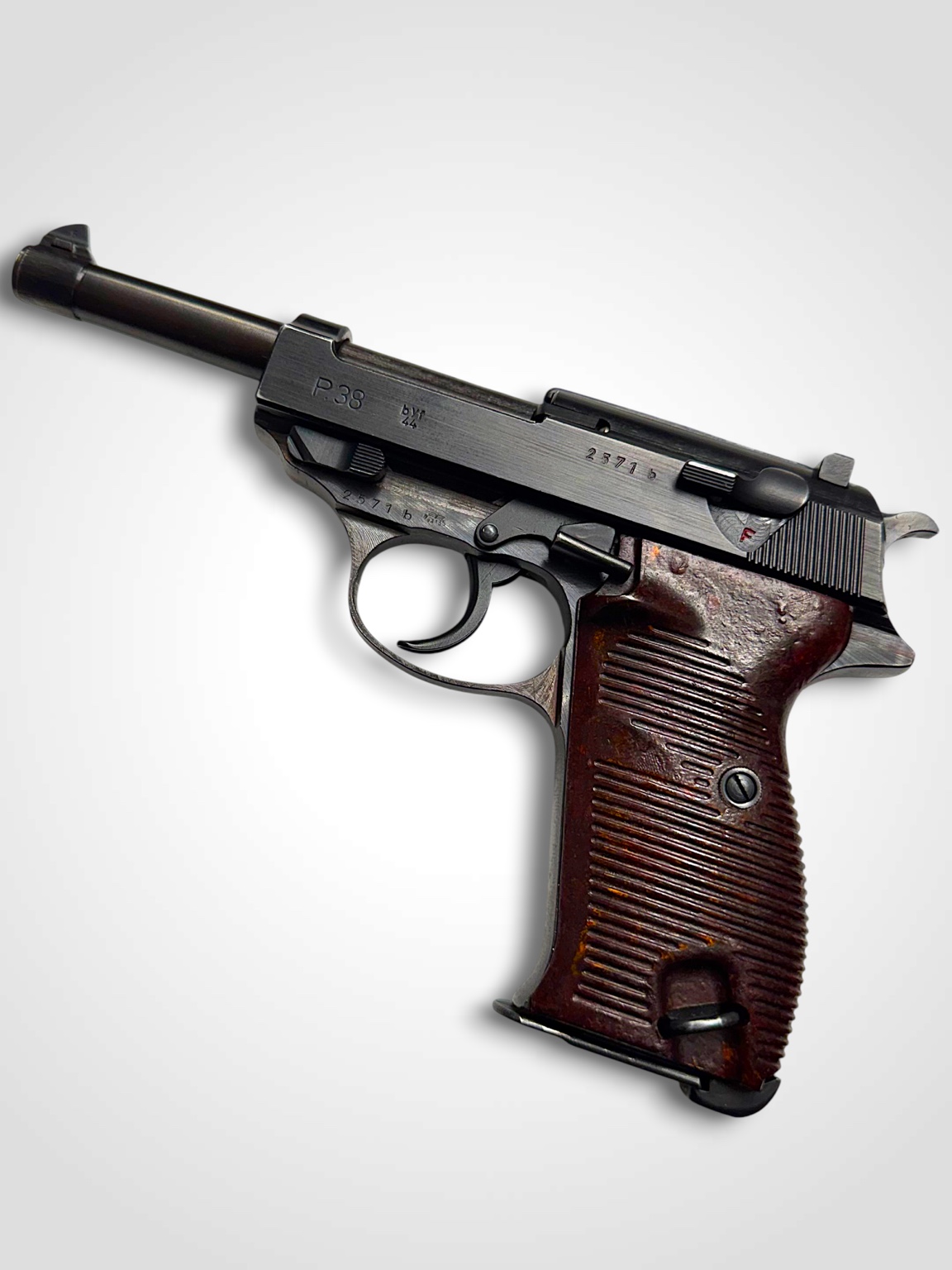
A modern replacement for the P08
Developed by Walther in the late 1930s, the P38 was adopted by the German military as a modern service pistol intended to succeed the long-serving P08 Luger. Its design incorporated a locked-breech system and a double-action first-shot capability, features that represented a significant change from the older Luger pattern.
The P38 was also significant because it was designed with wartime manufacturing in mind. Rather than relying on the P08's distinctive toggle-lock system and extensive machining, the newer pistol used a design that could be produced more efficiently as Germany's military requirements expanded. The result was a service pistol that combined a modern operating concept with features intended for large-scale production.
Its importance is easier to understand when viewed against the history of the P08. The Luger had become an icon through decades of service, but its manufacturing requirements were not ideally suited to a conflict in which production capacity and material conservation were increasingly important. The P38 represented part of the German military's broader shift toward newer designs.
Wartime production
World War II placed enormous demands on German arms manufacturers. Production of the P38 was eventually shared among several companies, with Walther, Mauser and Spreewerk becoming the principal wartime producers. Collectors can encounter substantial variation in finish, markings and small production details depending on the maker and year.
Those variations are one of the reasons the P38 remains such an interesting study for collectors. A pistol made early in the war may show different finishing and component characteristics from one produced later, while pistols from different manufacturers can have their own recognizable production traits. The progression is a useful reminder that “wartime P38” describes a broad family of production rather than one perfectly uniform configuration.
As the war continued, German industry faced shortages, disruption and increasing pressure to produce military equipment in greater quantities. Manufacturing choices that might seem minor today — changes in machining, finishing or component treatment — can reflect those larger industrial pressures.
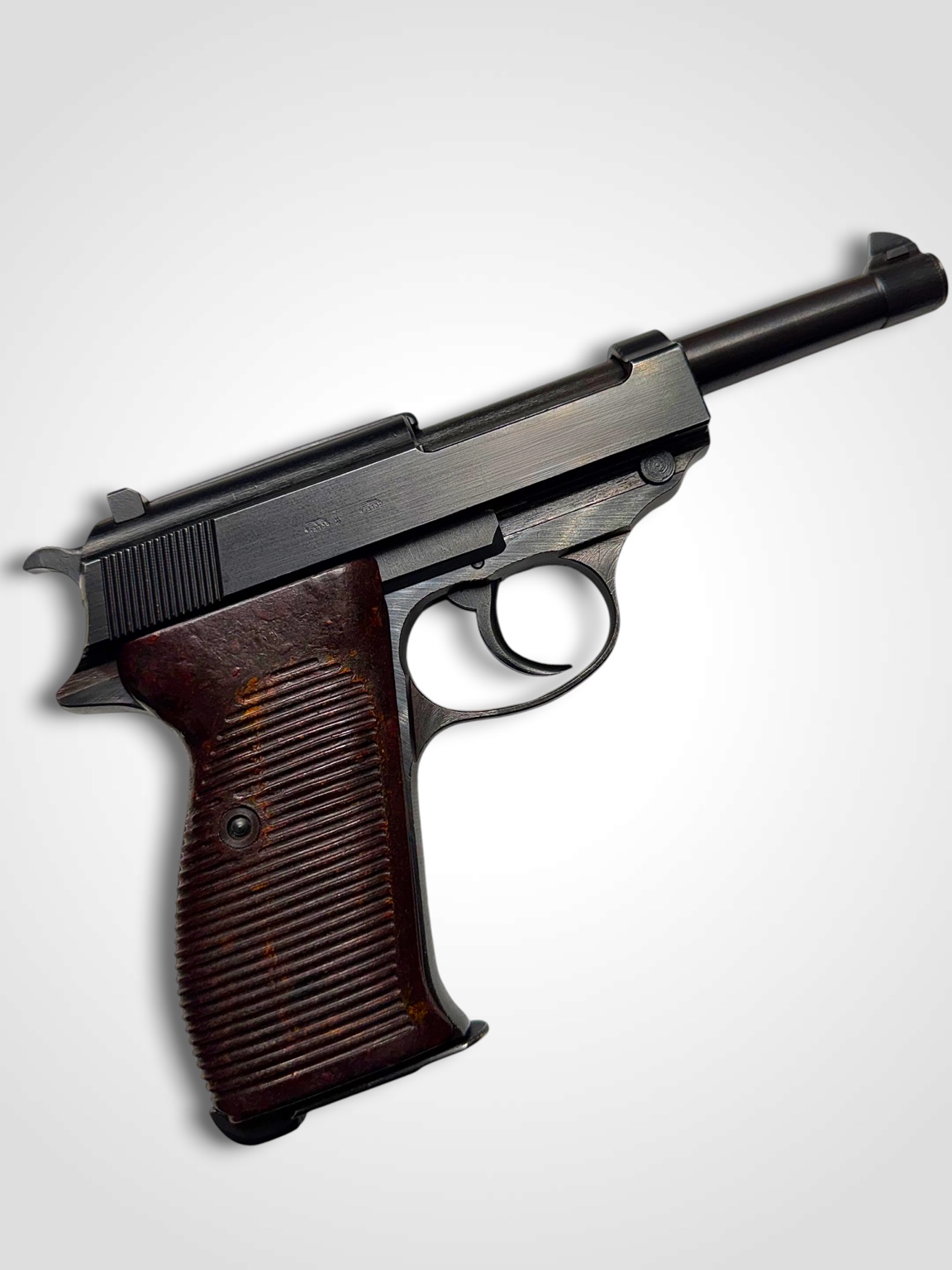
Reading the markings
This photographed example is especially interesting because the slide is marked “byf 44.” The three-letter code byf was assigned to Mauser during the wartime German coding system, while “44” denotes the production year 1944. Serial numbers, inspection marks and other small details can provide additional clues when researching a particular pistol.
For a collector, the most useful approach is to treat each marking as one piece of a larger record. The production code can establish the maker, the date can establish the manufacturing year, and serial numbers or acceptance marks can help place the individual pistol within that production context. Photographs are particularly valuable because tiny markings can be difficult to revisit once a firearm is stored away.
The reverse side of the pistol can be just as important as the side that carries the most obvious markings. Finish, proof or inspection marks, component numbers and wear patterns may provide additional information. A complete photographic record gives future researchers a much better starting point than a single overall photograph.
A collector's historical record
A wartime pistol is more than a model designation. The combination of manufacturer, date, markings, finish and configuration helps place an individual example within the broader history of wartime production. Clear photographs of both sides, the markings and any notable features make a collection record far more useful for future research.
Provenance can add another dimension. When documentation, family history, prior collection records or other credible information exists, it should be preserved alongside the firearm's physical observations. Good collecting practice separates what is directly observed from what is reported or believed, allowing future research to build on a clear foundation.
This kind of documentation also helps preserve the historical value of ordinary details. A worn grip, a particular finish or a small production mark may not seem significant in isolation, but together those details can help tell the story of how a pistol was made and how it survived.
The P38 in the broader history of service pistols
The P38 occupies an important point in the development of twentieth-century military sidearms. It arrived at a time when armies were looking for reliable service pistols that could be manufactured in large numbers while offering modern features. Its wartime career also demonstrates how a basic design can change as industrial circumstances change.
Why the P38 matters
The P38 is an important example of how military firearms evolved during the Second World War. It combined a new operating concept with a design that could be produced by multiple manufacturers under increasingly difficult wartime conditions. Today, those production differences are part of what makes surviving examples so valuable to historical study.