A modernization package rather than a new rifle
The Kalashnikov Concern modernization program represented a practical answer to a familiar military problem: how do you bring a large inventory of proven rifles closer to modern expectations without immediately replacing the entire fleet?
The KM-AK — commonly expanded as Komplekt Modernizatsii Avtomata Kalashnikova, or Kalashnikov assault-rifle modernization kit — was developed to update existing Kalashnikov-pattern rifles with improved ergonomics and accessory-mounting capability. Public references describe the kit as part of the broader Russian “Obves” modernization effort, with the KM-AK later associated with the upgraded AK-74M/AK-74 family. Jane’s reported on KM-AK deliveries, while a detailed historical reference traces the kit’s development and relationship to the AK-200 family.
That distinction matters for collectors. The package documented here is not simply an “AK-200 parts set” in the casual sense. It represents a particular stage in the Russian effort to modernize an established rifle architecture while retaining the underlying receiver and operating system.
Where the AK-200 connection comes in
The AK-200 family and the KM-AK modernization concept share a common design language. Both brought contemporary accessory mounting, revised furniture and improved ergonomics to the familiar Kalashnikov layout. Research on the Russian AK family notes that the KM-AK and AK-200 retained the classic AK-74M receiver and gas-system architecture, distinguishing them from later generations that introduced more substantial changes. Small Arms Review’s AK reference provides additional background.
That makes the kit particularly interesting as a transitional design. It shows how Russian engineers could update the external interface of an established rifle while preserving much of what already worked underneath.
What is included
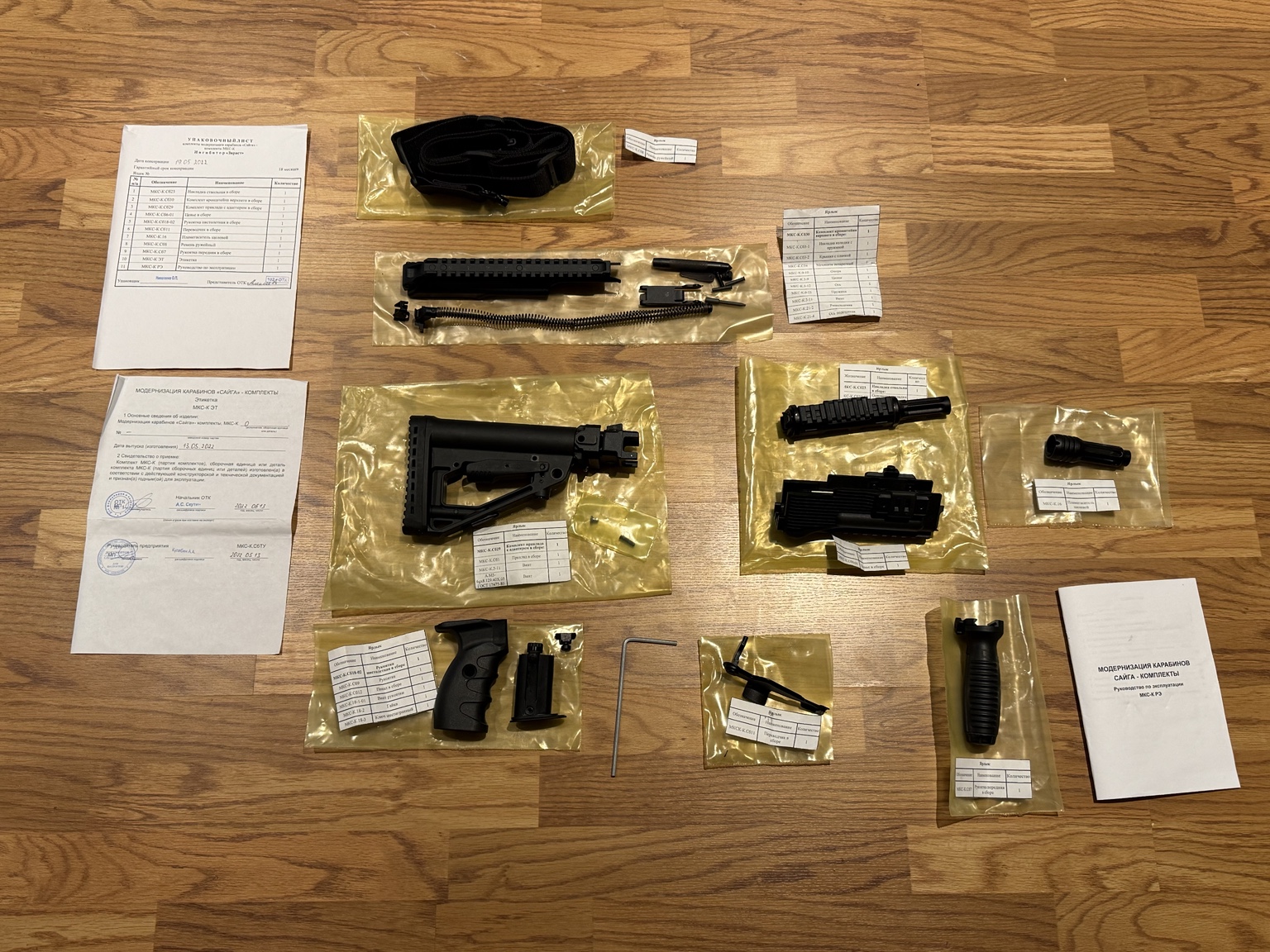
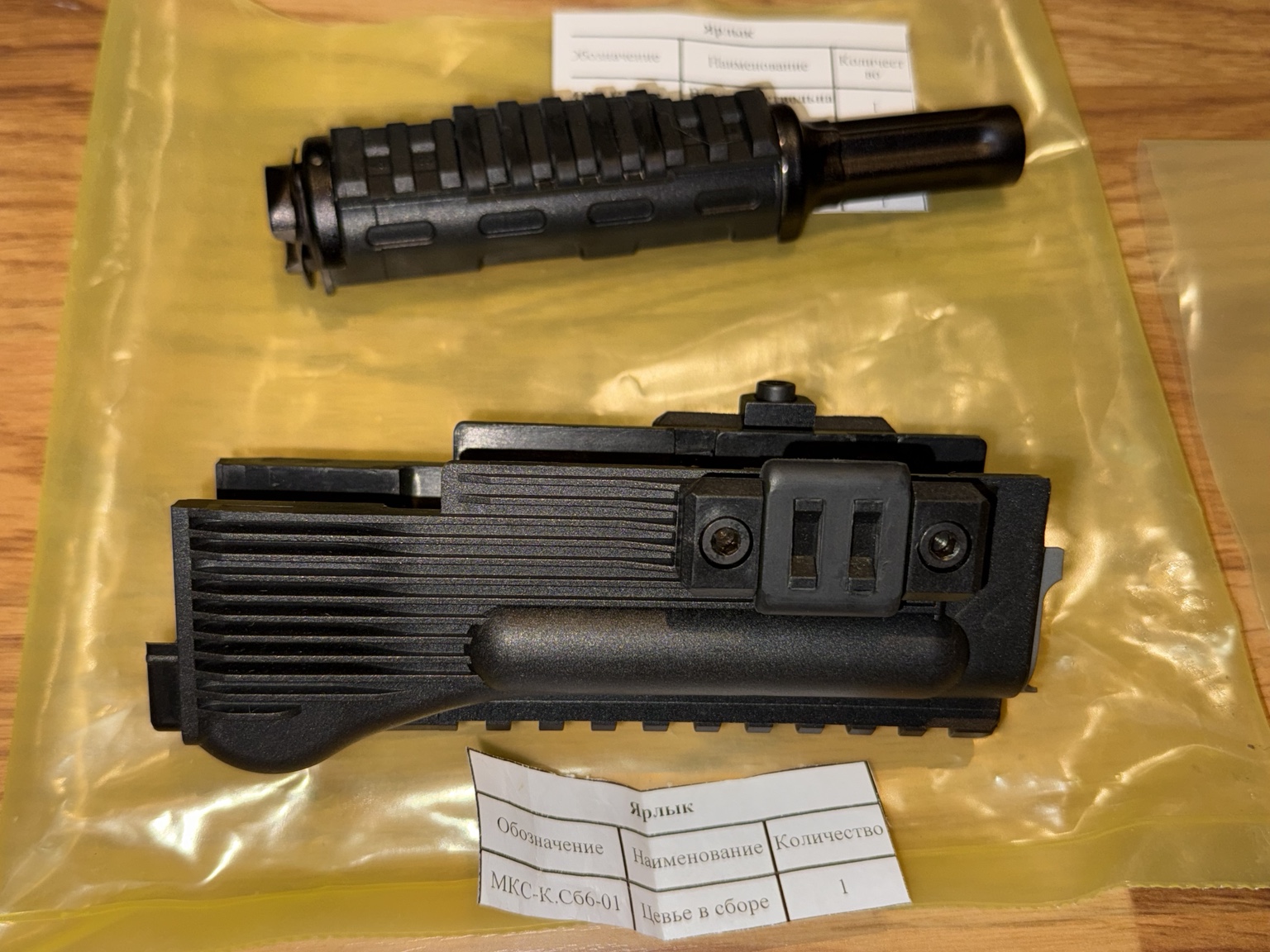
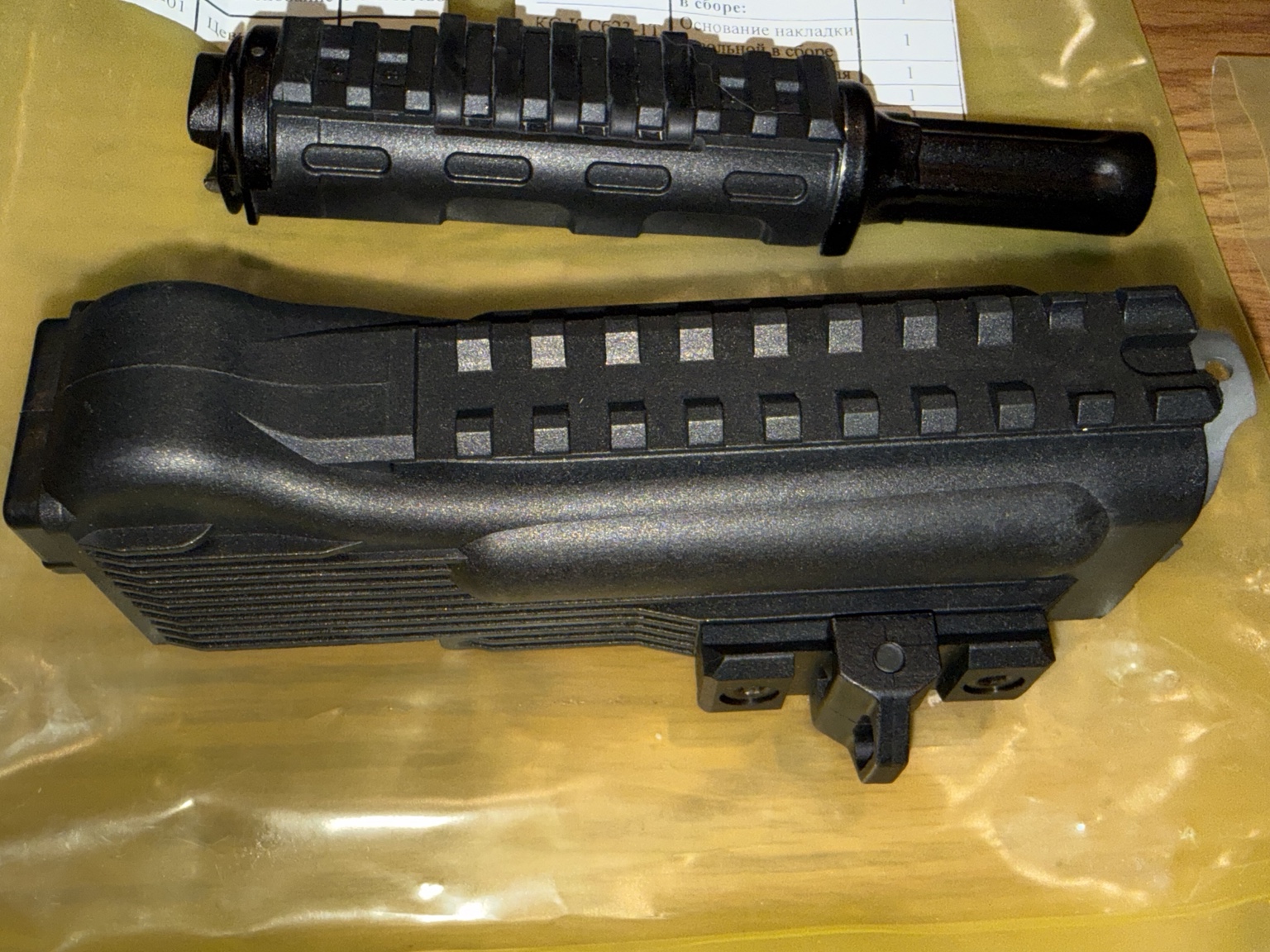
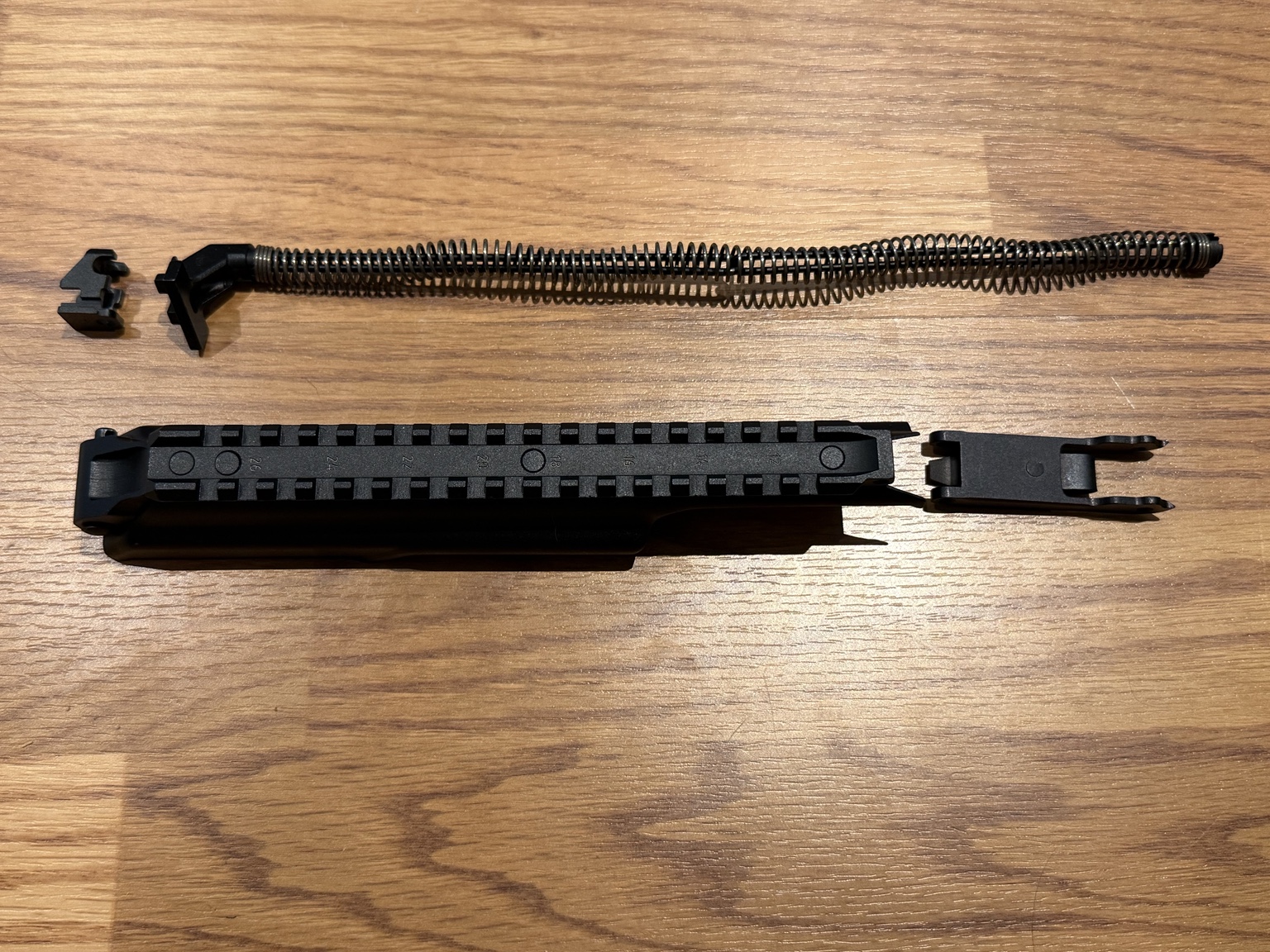
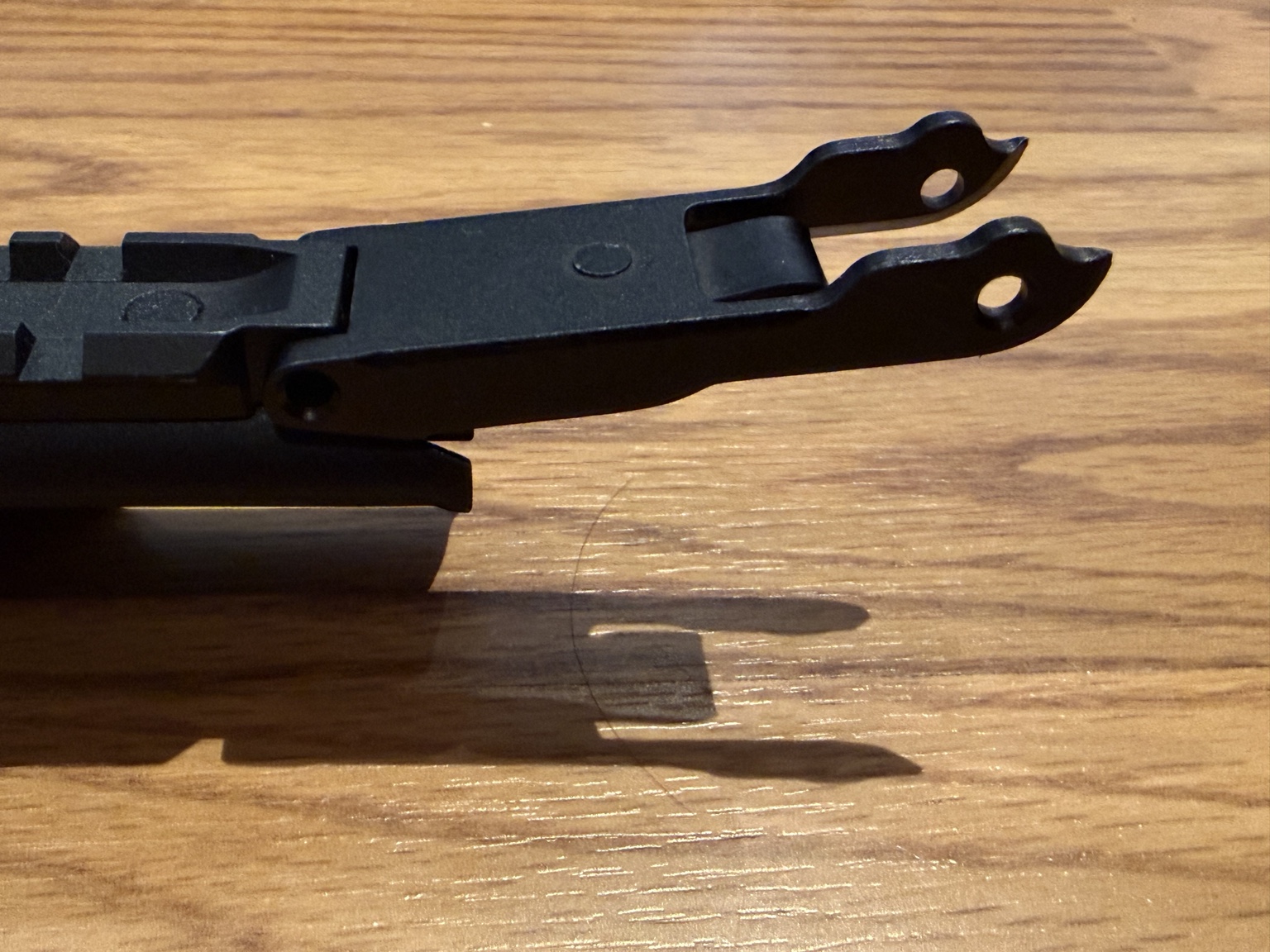
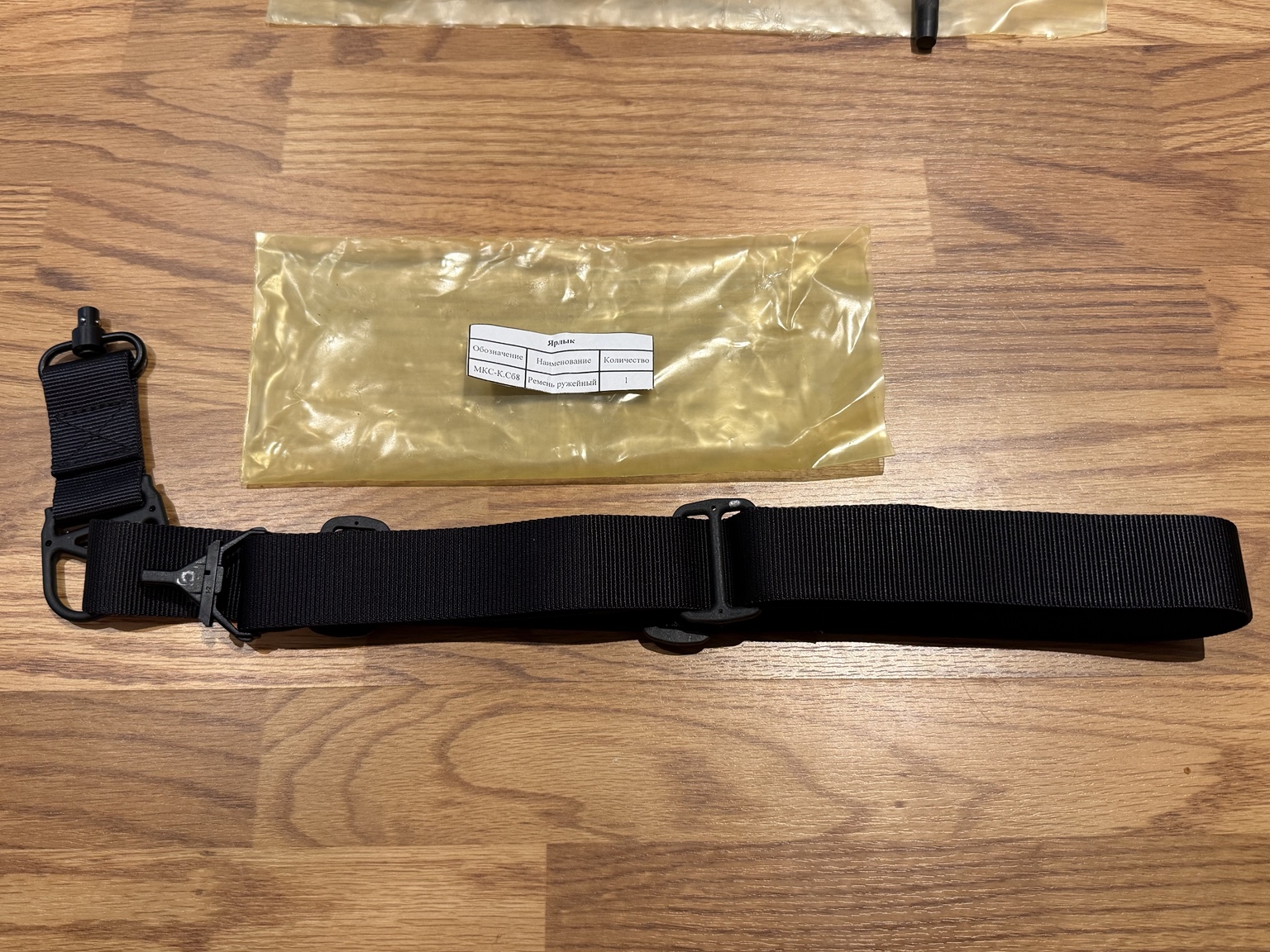
The photographs show a substantial collection of components rather than a single accessory. Among the most recognizable pieces are a modernized handguard assembly with accessory rails, a railed top-cover assembly, a revised pistol grip, a folding and adjustable stock assembly, a sling and other associated hardware.
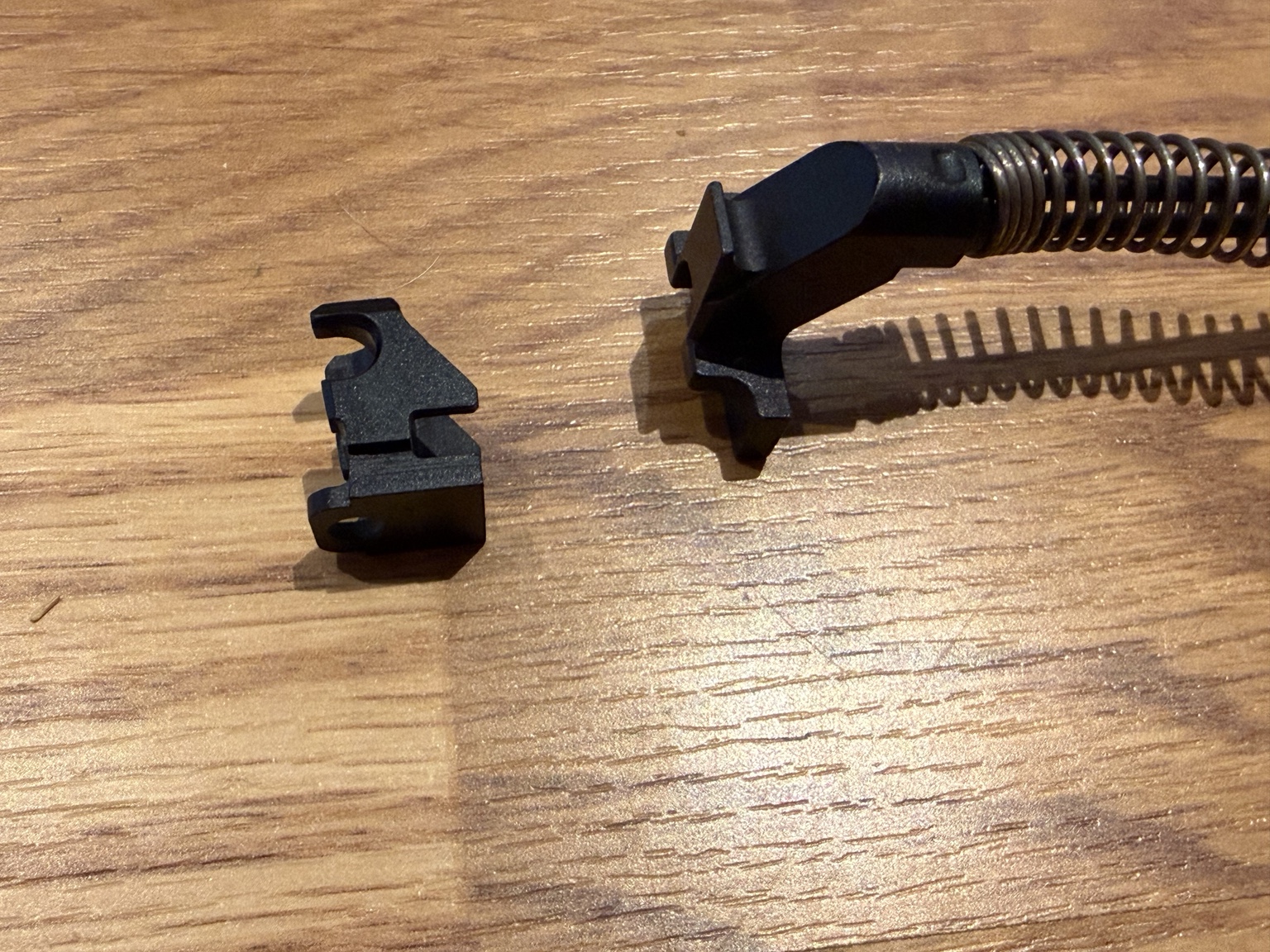
The kit also includes smaller components that are easy to overlook when photographed as a complete package. Those details are important because they show that the modernization was conceived as a coordinated system rather than a collection of unrelated aftermarket parts.
Ergonomics were a major part of the program
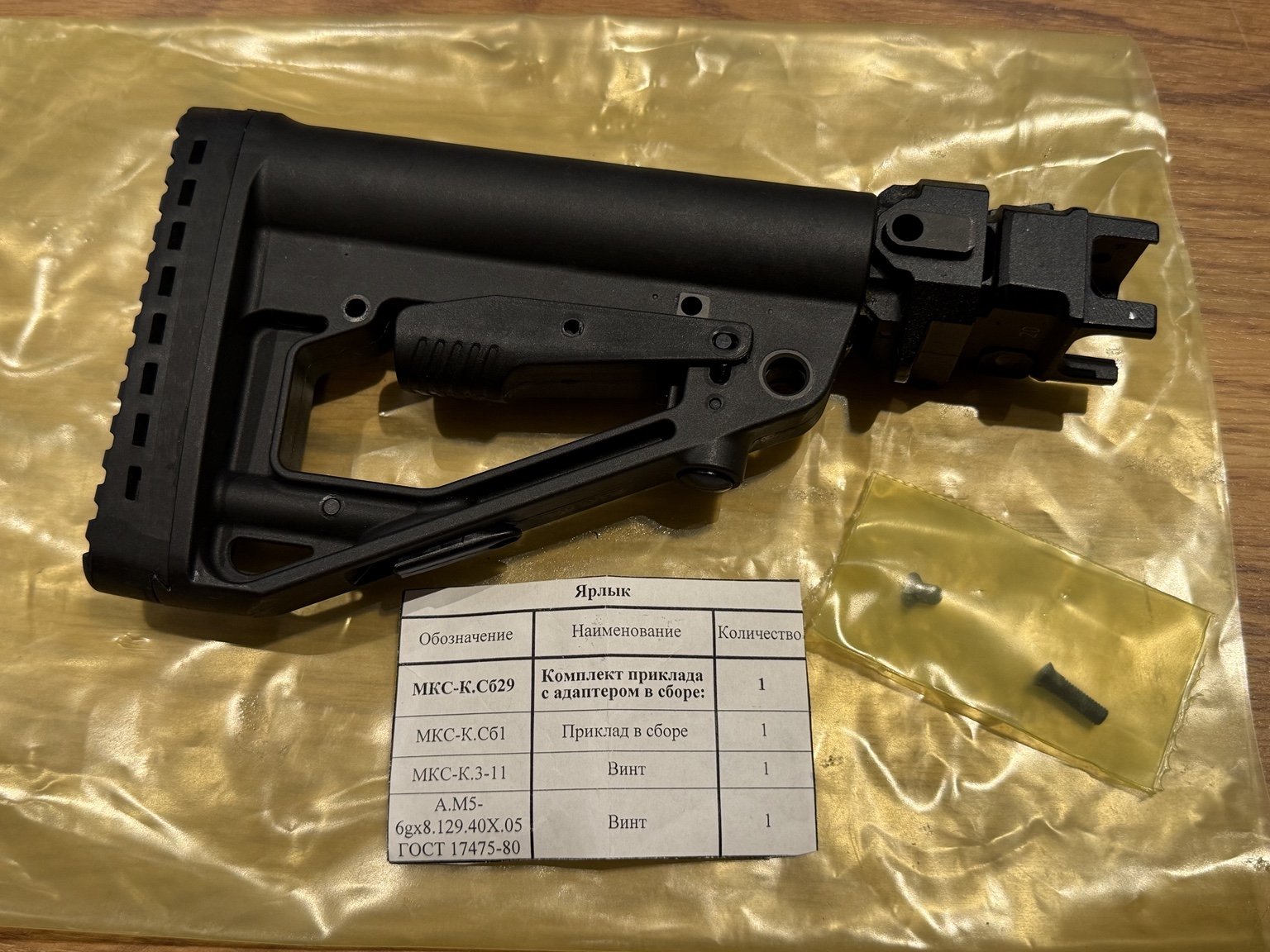
One of the most obvious differences between a traditional AK-74M and a rifle equipped with the modernization package is the emphasis on ergonomics. The revised pistol grip, adjustable stock and updated furniture address the limitations of older service-rifle furniture while giving the rifle a more contemporary feel.
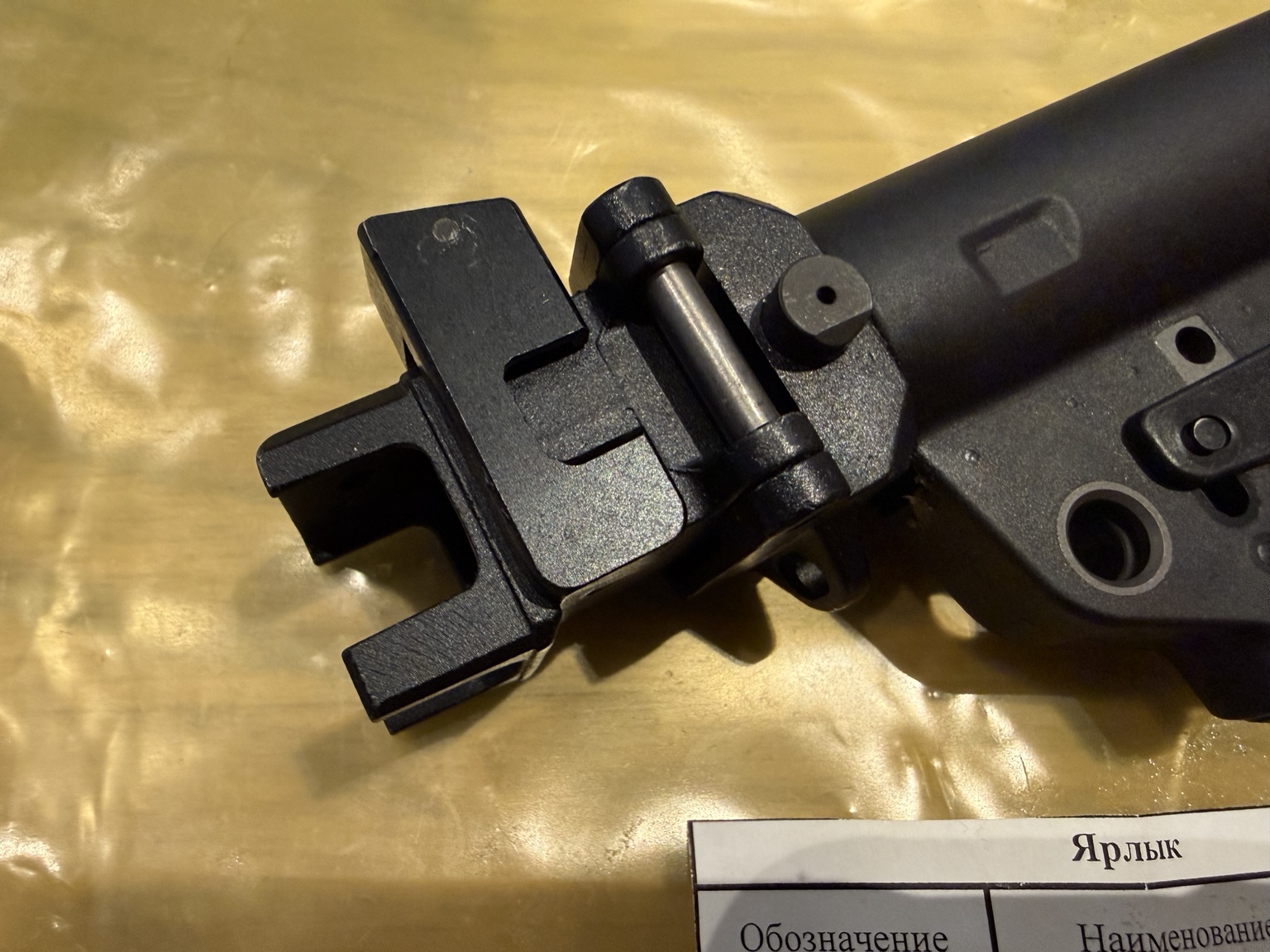
The stock photographed here is particularly representative of that transition. Its adjustable geometry and side-folding arrangement reflect the direction Russian small-arms design was taking during the period when the modernization program was being developed.
Optics and accessory mounting
Another defining feature of the modernization effort was the ability to mount modern aiming devices and accessories. The railed top cover and handguard system moved the Kalashnikov platform toward the accessory ecosystem that had become standard on newer service rifles.
Public technical references describe the universal upgrade package as providing mounting options for optics and other equipment while improving the rifle's handling characteristics. A U.S. Army reference similarly describes the Russian AK-74M universal upgrade kit as incorporating a new safety, dust cover and furniture with rails for modern aiming and accessory equipment. The U.S. Army reference provides additional context.
A transitional point in Russian small-arms design
The KM-AK is historically important because it sits between two generations of Russian service-rifle thinking. On one side was the enormous installed base of AK-74 and AK-74M rifles. On the other was the push toward newer designs such as the AK-12.
Contemporary reporting described the modernization effort as a way to improve existing rifles rather than immediately replace them. In 2016, Jane’s reported that thousands of AK-74M rifles in Russia's Central Military District had received the “Obves” upgrade kits, formally designated KM-AK. The report is a useful contemporary reference for the program.
Other historical references place the public unveiling of the universal AK-74M upgrade concept in 2015 and note that the program eventually led to rifles being accepted with the KM-AK equipment package. U.S. Army reference material and Small Arms Review’s historical reference provide useful context.
The relationship to the AK-12
It is tempting to describe the KM-AK simply as a precursor to the AK-12, but the relationship is more nuanced. The two programs shared a desire for improved ergonomics, accessory compatibility and a more modern soldier interface, while the KM-AK remained fundamentally an upgrade of an existing Kalashnikov architecture.
That makes the kit valuable as a historical snapshot. It documents the period when Russian designers were trying multiple approaches to modernizing the Kalashnikov family — from external upgrade packages to the development of entirely new production rifles.
Why this kit is interesting to collectors
For collectors, the appeal is not only the rarity of the individual components. It is the story the package tells about Russian small-arms development.
A conventional AK-74M represents a mature Soviet-era design carried forward into Russian service. A KM-AK-equipped rifle represents an attempt to bring that platform into a more modular era. The AK-200 family then provides another expression of the same design direction, while the AK-12 represents the eventual move toward a newer-generation service rifle.
Seeing the modernization kit outside the context of a finished rifle is especially useful. The components can be studied individually, documented, and compared with the furniture and interfaces that appeared on later Russian rifles.
Documenting the package
The accompanying photographs are as important as the components themselves. Several pieces remain in packaging with Russian-language labels and documentation, providing provenance and context that can be lost when components are separated from their original paperwork.
For this feature, Florida Kalash Media is intentionally preserving the owner's anonymity. No identifying information about the owner is included, and the article focuses exclusively on the historical significance and visible characteristics of the kit.
The photographs also show why detailed documentation matters with uncommon Russian equipment. Individual parts can resemble later or related designs, and casual identification can easily blur the differences between the KM-AK, AK-200 and later AK-12 families. Careful photography, original paperwork and comparison with period references are therefore valuable parts of the collector record.

Part 1 of 2
This first installment focuses on the modernization kit itself and why the KM-AK occupies an important place in the evolution of Russian Kalashnikov small arms. A second installment can take a closer look at the relationship between the modernization package, the AK-200 family and the broader transition toward the AK-12 generation.
For collectors, the larger lesson is straightforward: modernization programs can be just as historically revealing as newly manufactured firearms. The KM-AK shows a major military small-arms producer attempting to extend the useful life of an established platform while adapting it to a changing technological environment.