Design and identity
The P.08 Luger occupies a unique place in firearms history. Its toggle-lock action, sharply angled grip and slim receiver give it a silhouette that is recognizable even at a distance. Yet the familiar shape can sometimes make it easy to overlook how much information is contained in the small details. For collectors, the real story begins when the pistol is examined as an individual production item rather than simply identified as a “Luger.”
On a documented example, the manufacturer, production year, serial number, inspection marks, finish, grips and other components can help establish a much clearer picture of where the pistol fits within the broader P.08 production history. Those details also help distinguish an original configuration from a pistol that has been repaired, refinished or assembled from components from different periods.
The Luger’s toggle-lock action, grip angle and distinctive profile make it immediately recognizable. But recognition is only the starting point. A serious historical examination asks who made the pistol, when it was made, for whom it was produced and what evidence supports that conclusion.
Mauser production in the Second World War
Mauser-Werke in Oberndorf was one of the principal German manufacturers of the P.08 Luger. During the late 1930s and early 1940s, Mauser production included pistols identified by manufacturer markings and dated chamber codes, while the company also produced other major German service arms as wartime requirements expanded.
Mauser's Luger production is especially interesting because it sits near the end of a long P.08 story. The pistol had already been in military service for decades by the time Germany entered the Second World War. As wartime demand increased, production decisions were increasingly influenced by the need to maintain output while conserving time, labor and industrial resources.
That context matters when looking at surviving examples. A late-production military pistol should not necessarily be expected to display the same level of finish or the same small-component characteristics as an earlier commercial or military example. Variations can reflect the realities of wartime manufacturing rather than a single moment of production.
By the middle of the war, German small-arms production increasingly reflected pressure for higher output and simplified manufacturing. Changes in finishes, component sourcing, inspection practices and machining can therefore be meaningful clues when a collector documents a wartime example.
For historians and collectors, this is where markings become more than decoration. A small code or acceptance mark can connect an individual pistol to a manufacturer, a period of production and a particular stage of Germany's wartime industrial system. Serial-number placement and matching components can add another layer of evidence, particularly when several parts retain related numbers or markings.
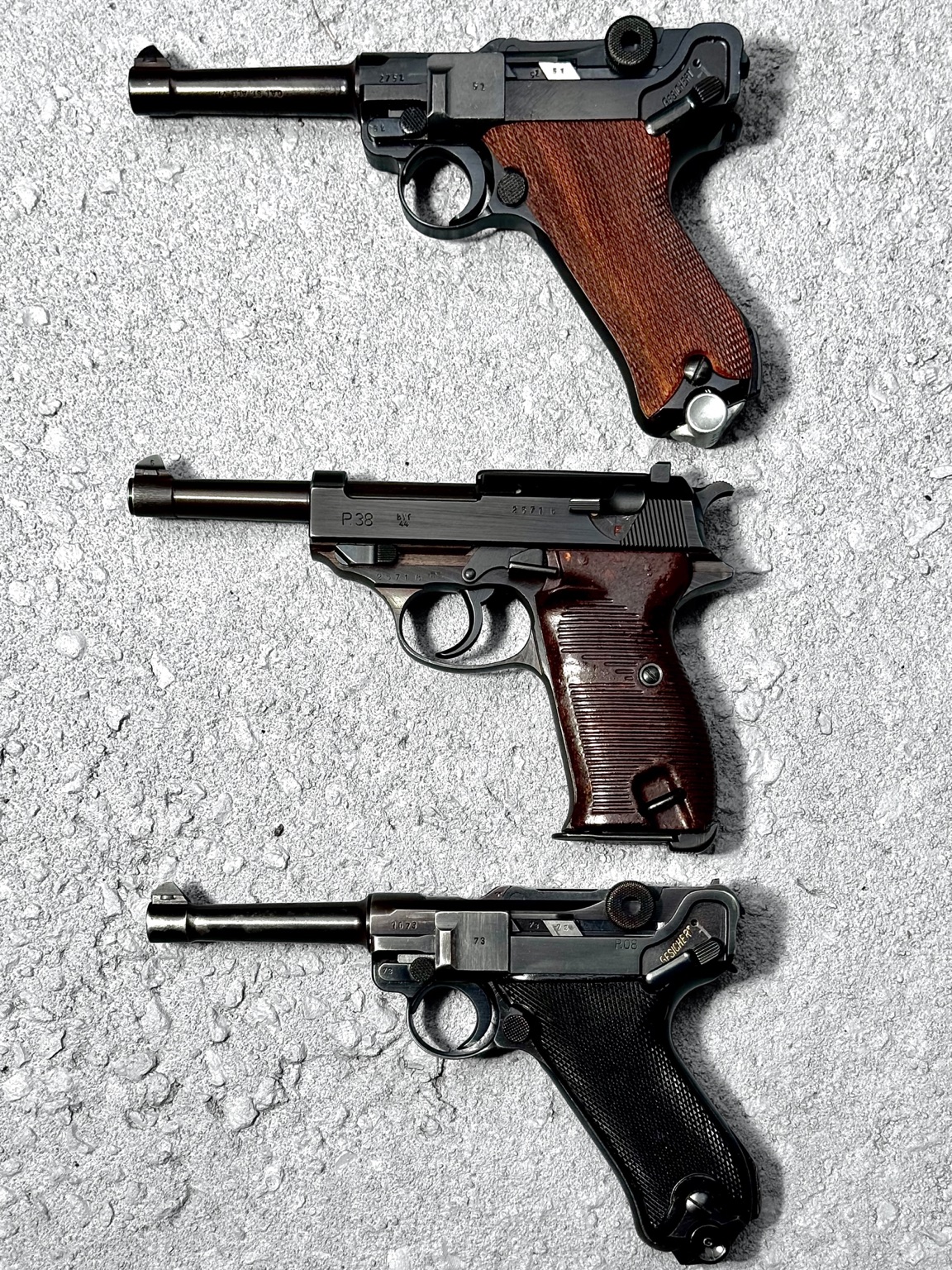
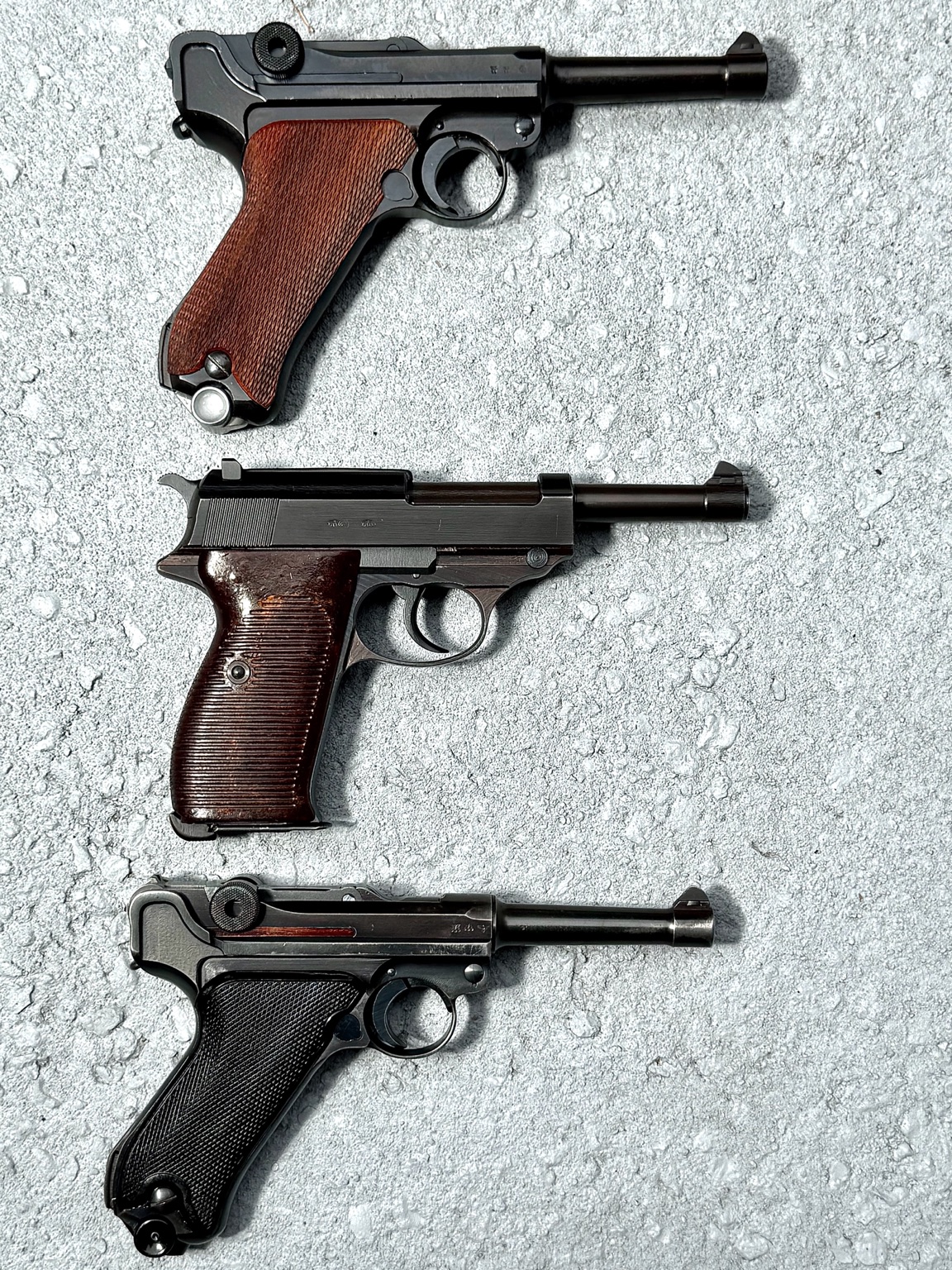
The same production environment is visible in the P38 shown in this comparison. The P38 represented a newer service-pistol design intended to be more efficient to manufacture than the Luger, and wartime examples can show their own distinctive manufacturer and production characteristics.
What collectors can document
Manufacturer markings, serial numbers, inspection or acceptance marks, finish, grips and other period-correct features can be recorded as part of a firearm’s research file. Photographs of these details are especially useful because they preserve information without requiring repeated handling.
A useful research record can include clear photographs of both sides of the pistol, the chamber or dated area, major markings, serial-number locations, grips, magazine markings and any unusual wear or repairs. Notes about provenance, when known, can be kept with the photographs. Even simple documentation can become valuable later when comparing an example with reference material or determining whether a component appears consistent with its period.
Condition should also be considered as part of the story. Honest wear, finish loss and evidence of long-term storage can tell a different story from modern refinishing or replacement parts. None of these observations should be treated as proof by themselves; they are pieces of evidence that become more useful when considered together.
The Luger in German service
The P.08's long service life helps explain why so many variations exist. It was adopted by Germany before the First World War and remained an important military and police sidearm for decades. By the Second World War, however, the design was an older system competing with newer service-pistol concepts. That makes late-war Lugers particularly interesting: they represent the continuation of a mature design during a period when German industry was simultaneously moving toward newer and more manufacturing-efficient weapons.
The comparison with the P38 is therefore more than a side-by-side look at two pistols. It illustrates a transition in military small arms — from an elegant, mechanically distinctive design that had become iconic to a newer service pistol intended to offer a more modern operating system and greater manufacturing practicality.
The bigger picture
A Luger is more than a recognizable pistol. It is a window into German industrial production, military procurement and the history of twentieth-century small arms. That context is what makes careful documentation worthwhile.